Septifix doesn't publish a full ingredient list like a food label. Here's everything the official Septifix page says is inside each 55-gram tablet, what each part is meant to do, and what independent sources say.
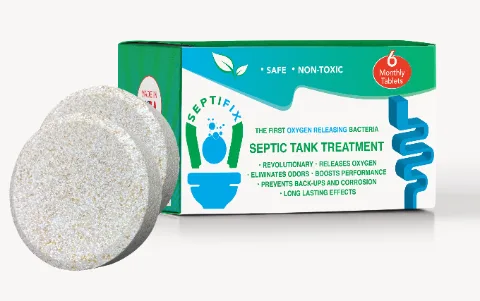
What's Inside Septifix at a Glance
| Component | Manufacturer's claim | Purpose |
|---|---|---|
| Aerobic bacteria | Over 10 billion bacteria from 14 strains | Break down cellulose, proteins, fats/grease and starches |
| Oxygen-releasing compounds | Up to 10 liters of oxygen per tablet | Support aerobic bacteria; reduce odor-causing anaerobic activity |
| Sodium carbonate & pH regulators | Not quantified | Raise acidic tank pH toward neutral |
| Tablet weight | 55 grams | Heavy enough to sink to the sludge layer |
All figures are from the official Septifix page and haven't been independently verified.
1. Aerobic Bacteria (14 Strains)
Septic tanks rely on bacteria to break down waste. Many of the bacteria in a typical tank are anaerobic — they live without oxygen and produce the “rotten egg” smell of hydrogen sulfide. Aerobic bacteria need oxygen and generally break organic matter down faster.
Septifix says its tablets add over 10 billion aerobic bacteria from 14 strains, selected to digest the main materials that build up in a tank:
- Cellulose — toilet paper and plant matter
- Proteins — food scraps and organic waste
- Fats, oils and grease (FOG) — a leading cause of clogs
- Starches — common in food waste
The manufacturer also says its bacteria can thrive for up to 90 days. The specific strain names aren't published.
2. Oxygen-Releasing Compounds
The feature Septifix highlights most is oxygen: up to 10 liters released as micro-bubbles once the tablet reaches the bottom of the tank. The idea is that more oxygen favors the aerobic bacteria and makes conditions harder for odor-causing anaerobic ones. The company doesn't say which compound releases the oxygen.
3. Sodium Carbonate & pH Regulators
Sodium carbonate (washing soda) is a common alkaline compound. A healthy tank works best near neutral pH; acidic cleaners and decomposing sludge can push it lower. Septifix says its pH-regulating compounds help bring the wastewater back toward neutral so bacteria can multiply.
See Septifix on the Official Website
55-gram tablets with bacteria, oxygen and pH compounds, per the manufacturer. 60-day money-back guarantee.
Check Official Septifix Price → Opens the official Septifix order page (secure BuyGoods checkout). Prices checked October 7, 2026; confirm the total at checkout.Is Septifix Safe for Pipes and the Environment?
The manufacturer describes Septifix as non-toxic, environmentally safe, free of harsh chemicals and non-corrosive. It isn't a caustic drain cleaner (like lye or sulfuric acid products), which can damage pipes and kill a tank's bacteria. We couldn't find independent testing of the tablet itself, and the EPA notes that additives in general can, in some cases, harm systems or groundwater. Keep tablets away from children and pets, and follow the package directions. EPA septic additives fact sheet (PDF).
What the EPA Says About Bacteria Additives
The EPA says a working septic system already contains “the bacteria, enzymes, yeasts, fungi, and microorganisms needed to function properly,” and that additives are “unnecessary for operation.” That doesn't mean Septifix can't help in some situations, but it does mean you shouldn't rely on it instead of inspection and pumping.
Frequently Asked Questions
What is in Septifix?
According to the manufacturer, each 55-gram tablet contains over 10 billion aerobic bacteria from 14 strains, oxygen-releasing compounds (up to 10 liters of oxygen) and sodium carbonate plus other pH-regulating compounds.
Does Septifix contain enzymes?
The official page focuses on bacteria, oxygen and pH compounds. The bacteria produce their own enzymes as they digest waste.
Is Septifix non-toxic?
The manufacturer describes it as non-toxic and environmentally safe. We couldn't find independent testing of the tablet. Keep it away from children and pets.
Will Septifix damage my pipes?
The manufacturer says it's non-corrosive and contains no harsh chemicals, unlike caustic drain cleaners.
Which bacteria strains are in Septifix?
The specific strain names aren't published on the official page; it says 14 strains of aerobic bacteria.